
What the Future of Marketing Might Actually Look Like
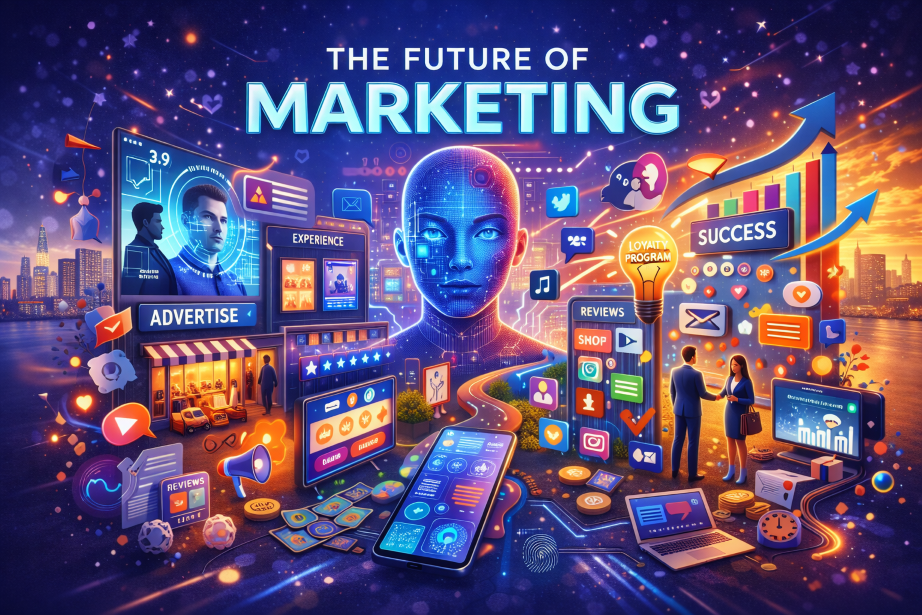
Marketing has never stood still. It evolved from print to radio, from television to digital, from websites to social media, from mass messaging to hyper-personalization. And yet, the next 5–10 years may bring more change than the last 20 combined.
The future of marketing will not just be “more digital.” It will be smarter, more predictive, more automated, more immersive — and at the same time, more human.
Let’s explore what marketing might actually look like in the near future — beyond the hype.
AI Will Not Replace Marketers — It Will Redefine Them
Artificial Intelligence is already transforming marketing, but we are still in the early stages.
Today AI:
- Writes content
- Creates visuals
- Analyzes data
- Personalizes emails
- Optimizes ad campaigns
In the future, AI will go much further.
Predictive Behavior Modeling
AI will not just analyze past behavior — it will predict future behavior with increasing accuracy.
Imagine:
- Knowing which customers are likely to churn before they do
- Predicting when someone is ready to buy
- Automatically adjusting messaging based on emotional signals
Marketing will become proactive instead of reactive.
Real-Time Personalization at Scale
Websites, emails, ads, and even product pricing will dynamically change based on:
- Location
- Purchase history
- Browsing patterns
- Income brackets
- Social behavior
Two people visiting the same website may see completely different offers.
The future is not “segmentation.”
It’s hyper-personalization.
Face Recognition and Biometric Marketing
This is where things get interesting — and controversial.
Facial recognition technology is already used in:
- Airports
- Retail security
- Smartphone authentication
In the marketing world, it may evolve into:
- Digital billboards adjusting content based on the age or gender of viewers
- Retail stores identifying returning customers
- Emotional recognition software measuring reactions to ads
Imagine walking past a digital billboard and seeing an ad tailored specifically to your demographic profile.
While privacy regulations will limit certain applications, this technology will not disappear. Instead, it will evolve within stricter legal frameworks.
The future marketing battlefield will be heavily influenced by ethics and regulation.
Offline Marketing Will Become Smart and Data-Driven
Many people assume offline marketing is dying. It isn’t. It’s transforming.
Smart Billboards
Future billboards will:
- Change messaging based on traffic data
- Adapt to weather conditions
- Display offers tied to nearby stores
- Integrate with mobile notifications
For example:
If rain starts, a billboard might promote umbrellas.
If traffic slows, it might show restaurant discounts nearby.
Offline advertising will become dynamic, not static.
Radio and TV Will Become More Targeted
Traditional broadcasting will merge with data.
Connected TVs and smart devices already allow advertisers to:
- Target households by demographics
- Serve personalized ads
- Track viewing behavior
Radio, especially digital radio and streaming platforms, will also use AI to:
- Customize ads
- Adjust tone and content
- Personalize promotional messages
Mass marketing will shrink. Targeted broadcasting will grow.
Social Media Will Become More Community-Driven
Organic reach is already shrinking. In the future, it will become even more competitive.
What will matter most:
- Micro-communities
- Private groups
- Niche authority
- Authenticity
Brands will not win by being loud. They will win by being relevant.
We will see:
- Smaller but stronger communities
- More closed groups
- More subscription-based social platforms
- More creator-driven ecosystems
Social media will move from broadcasting to belonging.
Loyalty Programs Will Become Intelligent Ecosystems
Loyalty programs will no longer just reward purchases.
Future loyalty systems may:
- Track engagement, not just transactions
- Offer dynamic rewards
- Use gamification
- Integrate with health apps, location tracking, and lifestyle data
Instead of “collect points,” it might become:
- Unlock experiences
- Access private communities
- Personalized discounts based on predictive behavior
Brands will reward relationships, not just revenue.
Customer Reviews Will Become Even More Powerful
Trust will dominate the future of marketing.
Consumers already:
- Check reviews before buying
- Trust peer recommendations
- Research extensively
In the future:
- AI-generated fake reviews will increase
- Platforms will invest heavily in authenticity verification
- Verified buyer systems will become stricter
Brands that build transparent, real reputations will outperform those relying on paid visibility.
Trust will be more valuable than impressions.
Marketing Will Become More Ethical (Or It Will Collapse)
As technology advances, consumers will demand:
- Transparency
- Data protection
- Responsible AI usage
- Honest communication
Brands that abuse personalization will lose credibility quickly.
The future marketer will need:
- Technical understanding
- Ethical awareness
- Regulatory knowledge
Trust will not be optional.
Physical Retail Will Become Experiential
Retail stores won’t disappear. They will transform.
Expect:
- Interactive displays
- AR mirrors
- AI assistants
- Frictionless checkout
- Personalized in-store experiences
Stores will become:
- Showrooms
- Experience centers
- Brand immersion environments
Online convenience will blend with offline experience.
Content Will Still Matter — But Quality Will Be Rare
As AI makes content creation easier, the internet will be flooded with average material.
This will make:
- Deep expertise
- Personal insights
- Authentic storytelling
Even more valuable.
The future belongs to:
- Experts
- Educators
- Problem-solvers
- Community leaders
Not content factories.
The Human Element Will Win
Despite all automation, AI, and smart systems, one thing will remain constant:
People buy from people they trust.
Technology will enhance marketing.
But emotion will still drive decisions.
Empathy.
Relevance.
Storytelling.
Credibility.
These will never disappear.
So What Will the Future of Marketing Actually Look Like?
It will look like:
- AI-powered but human-led
- Data-driven but emotionally intelligent
- Automated but personalized
- Technological but ethical
It won’t be about shouting louder.
It will be about understanding deeper.
Final Thought
Marketing in the future will not belong to those who chase every trend.
It will belong to those who:
- Understand people
- Adapt to technology
- Respect privacy
- Build trust
- Deliver real value
The tools will change.
The platforms will evolve.
The algorithms will shift.
But the core of marketing — solving problems and building relationships — will remain timeless.
And that’s something no machine can fully automate.