FOMO Marketing: Why Limited Offers Work So Well 🚀
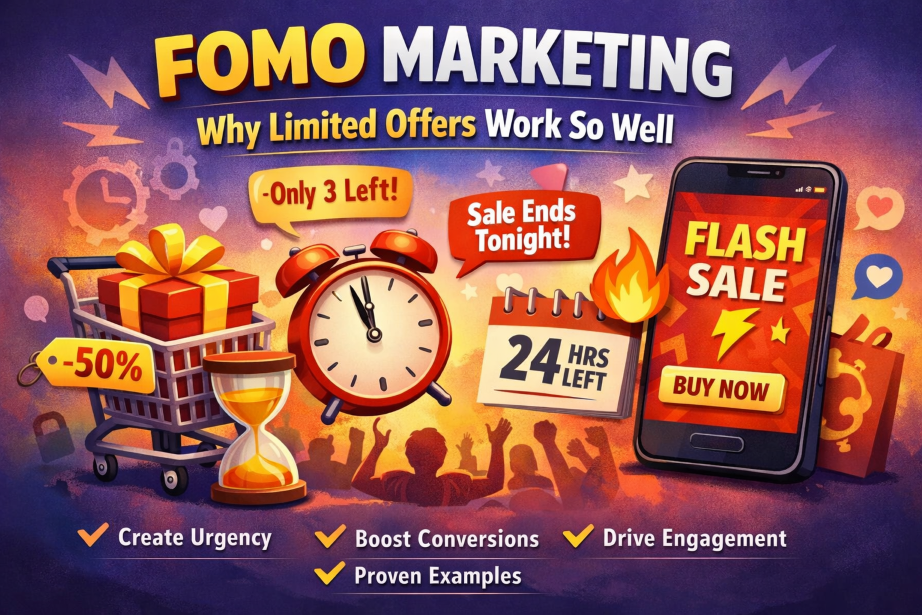
In today’s digital world, consumers are constantly exposed to thousands of ads, posts, and promotions every single day. Because of this overload, getting people to take action immediately has become one of the biggest challenges in marketing.
So how do successful brands encourage people to buy now instead of later?
One of the most powerful strategies is FOMO marketing — the Fear of Missing Out.
You’ve probably seen messages like:
⏳ “Only 24 hours left!”
🔥 “Last 5 items in stock!”
🎟️ “Limited seats available!”
⚡ “Flash sale ends tonight!”
Suddenly, the decision feels urgent.
You don’t want to miss the opportunity.
That’s exactly how FOMO marketing works.
When used correctly, it can dramatically increase conversions, engagement, and sales. In this article, we’ll explore:
✔ What FOMO marketing is
✔ Why it works psychologically
✔ Real brand examples
✔ Best practices for different industries
✔ How to promote limited offers on social media
✔ How to build a FOMO marketing funnel
Let’s dive in.
What Is FOMO Marketing? 👀
FOMO marketing is a strategy that encourages customers to act quickly by creating urgency or scarcity around an offer.
It works by triggering the fear that an opportunity might disappear soon.
This can include:
- Limited-time discounts
- Flash sales
- Low-stock alerts
- Exclusive access offers
- Early-bird pricing
- Limited product releases
When people believe something is rare or temporary, they perceive it as more valuable.
As a result, they are more likely to make faster purchasing decisions.
Why FOMO Marketing Works So Well 🧠
FOMO marketing is powerful because it taps into several core psychological principles.
1. Scarcity Increases Value
One of the most well-known marketing principles is scarcity.
When something is limited, people automatically assume it is more valuable.
Think about:
👟 Limited edition sneakers
🎟️ Concert tickets
💎 Exclusive memberships
🛍️ Seasonal collections
The fewer there are, the stronger the demand becomes.
This principle has been studied extensively in behavioral psychology and marketing science.
2. People Fear Losing Opportunities
Humans dislike losing opportunities more than they enjoy gaining something new.
This is known as loss aversion.
For example:
“Get 30% off today”
is attractive.
But:
“Miss today’s 30% discount and pay full price tomorrow”
creates stronger motivation to act immediately.
Loss feels more painful than gain feels rewarding.
3. Social Proof Amplifies FOMO
FOMO becomes even stronger when people see that others are already taking advantage of the offer.
Examples include:
👥 “500 people bought this today”
🔥 “Trending product”
🏨 “12 people are viewing this hotel”
⚡ “Selling fast!”
These signals create the feeling that:
If everyone else wants it, it must be valuable.
And nobody wants to be the one who missed out.
Real Examples of FOMO Marketing 🏆
Many successful brands rely heavily on FOMO marketing.
Nike Limited Sneaker Drops 👟
Nike regularly releases limited sneaker collections through special product drops.
These releases often:
- Sell out in minutes
- Create huge social media buzz
- Generate massive demand
Scarcity turns every launch into a highly anticipated event.
Booking.com Urgency Messages 🏨
Booking platforms frequently display messages like:
⚠️ “Only 1 room left at this price”
👀 “15 people are viewing this property”
📅 “Booked 7 times in the last 24 hours”
These subtle cues encourage users to book quickly before the deal disappears.
Amazon Lightning Deals ⚡
Amazon uses limited-time offers to drive fast purchasing decisions.
These deals typically include:
⏳ Countdown timers
📦 Limited inventory
🔥 Temporary discounts
Customers feel pressure to buy before the timer runs out.
Spotify Wrapped 🎧
Spotify Wrapped is available only once a year.
Because of its limited availability, millions of users rush to share their results across social media.
Scarcity can apply not only to products but also to experiences and content.
Types of FOMO Marketing 🔥
Businesses can create urgency in several ways.
Time-Based Scarcity ⏳
This is the most common form of FOMO.
Examples include:
- 24-hour sales
- Flash discounts
- Weekend promotions
- Countdown timers
Time-limited offers push customers to make decisions faster.
Quantity Scarcity 📦
Examples include:
- “Only 10 left in stock”
- “Limited edition collection”
- “First 100 customers only”
This works extremely well for premium or collectible products.
Exclusive Access 🔐
People love feeling special.
Examples include:
⭐ VIP access
⭐ Members-only discounts
⭐ Early product launches
⭐ Private communities
Exclusivity increases perceived value.
Seasonal Scarcity 🎄
Some opportunities naturally feel limited.
Examples:
🎁 Black Friday deals
☀️ Summer promotions
🎓 Back-to-school campaigns
🎄 Holiday offers
These promotions align with natural shopping behavior.
Best Practices for Different Types of Businesses 💡
Different industries can apply FOMO marketing in different ways.
FOMO Marketing for E-Commerce 🛒
E-commerce brands benefit enormously from urgency strategies.
Best tactics include:
🔥 Flash sales
⏳ Countdown timers
📦 Low-stock alerts
🚀 Limited product drops
Example funnel:
Social media ad → Product page → Countdown timer → Checkout → Upsell
Tools often used include Shopify apps and countdown widgets.
FOMO Marketing for Digital Products 💻
Digital products aren’t limited by stock, so scarcity must be created differently.
Effective strategies include:
📅 Limited enrollment periods
🎓 Live course launches
🎁 Bonuses for early buyers
💰 Early-bird pricing
Example:
“Enroll in the next 48 hours and receive 3 bonus masterclasses.”
This motivates customers to act quickly.
FOMO Marketing for Services 📈
Service providers can create urgency by limiting availability.
Examples include:
📊 Limited consulting spots
📅 Monthly booking limits
🎯 Exclusive strategy sessions
Example:
“Only 5 consulting spots available this month.”
This also reinforces premium positioning.
How to Promote Limited Offers on Social Media 📱
Social media platforms are perfect for FOMO marketing because people scroll quickly and respond well to urgency.
Best Types of FOMO Ads
Countdown Ads ⏳
Ads with countdown visuals can significantly increase conversions.
Example message:
“Sale ends in 12 hours.”
Urgency grabs attention immediately.
Instagram & Facebook Story Ads 📲
Stories disappear after 24 hours, making them naturally aligned with FOMO.
You can use:
⏳ Countdown stickers
🔥 Flash sale announcements
👀 Sneak peeks of upcoming launches
Stories feel exclusive and immediate.
Retargeting Ads 🎯
Many customers hesitate before buying.
Retargeting ads remind them:
“Still thinking about it? Only 3 items left.”
These ads are often the highest converting ads in a campaign.
Creating a FOMO Marketing Funnel 🚀
An effective funnel builds urgency step by step.
Step 1: Awareness
Introduce the upcoming opportunity.
Example:
“Something exciting is launching tomorrow.”
Goal: build curiosity.
Step 2: Interest
Reveal the offer and highlight scarcity.
Example:
“Early access opens for 48 hours only.”
Step 3: Conversion
Use strong urgency triggers:
⏳ Countdown timers
🔥 Limited spots
🎁 Expiring bonuses
This is where most purchases happen.
Step 4: Retargeting
Remind hesitant buyers.
Example:
“Last chance — offer ends tonight.”
Retargeting ads often deliver the highest ROI.
The Biggest Mistake in FOMO Marketing ⚠️
The biggest mistake brands make is fake urgency.
If every sale is “ending today” but continues tomorrow, customers will quickly lose trust.
Authenticity matters.
Real scarcity builds credibility.
Fake scarcity destroys it.
Final Thoughts 💭
FOMO marketing works because it taps into a powerful human emotion — the fear of missing an opportunity.
When done well, it can:
🚀 Increase conversions
📈 Boost engagement
🔥 Create excitement around products
🎯 Turn promotions into events
However, the most successful brands combine urgency with real value, transparency, and great customer experience.
When customers believe an opportunity is truly limited, they don’t want to miss it.
And that’s the true power of FOMO marketing.