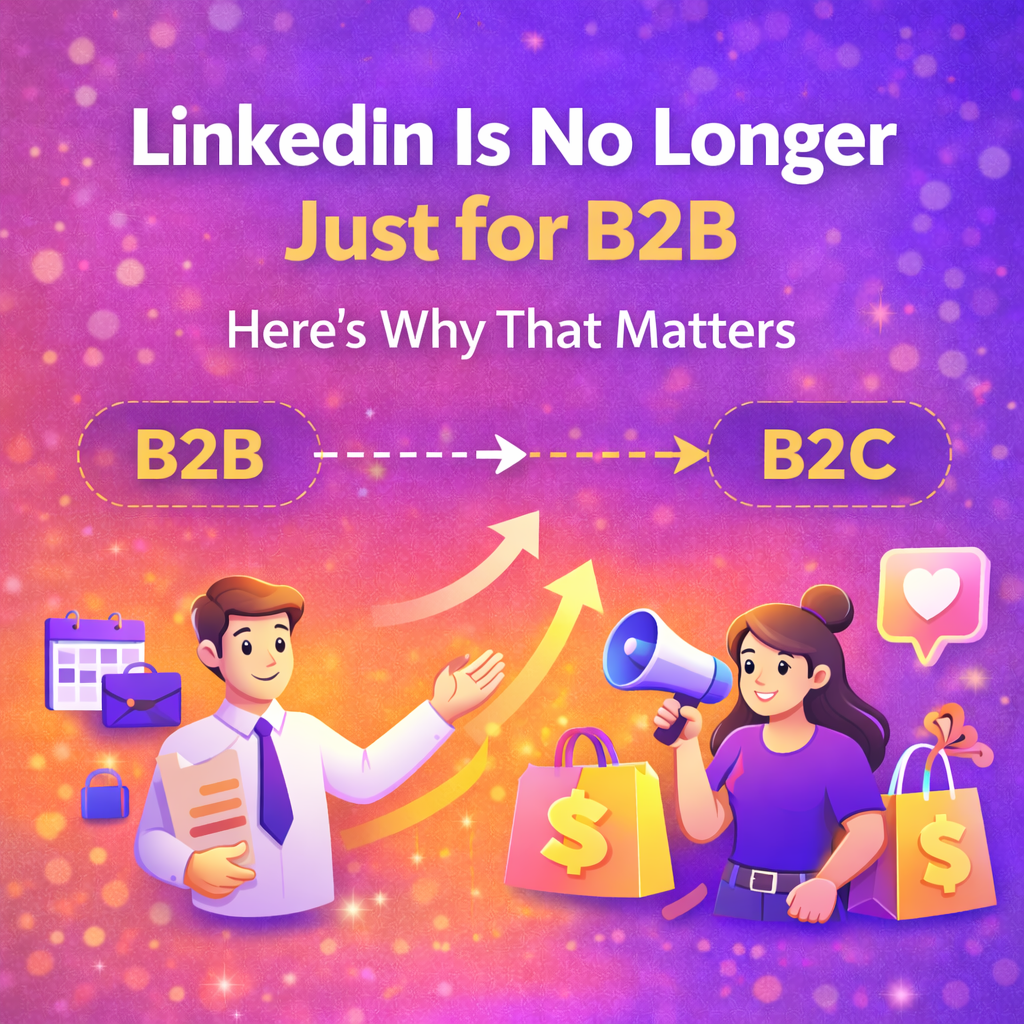
💼✨ LinkedIn Is No Longer Just for B2B – Here’s Why That Matters
For years, LinkedIn carried a very specific reputation.
It was the place for B2B marketers, recruiters, consultants, and corporate professionals. A platform where polished job titles mattered more than personality, and where most content sounded like it came straight from a boardroom presentation 📊.
That version of LinkedIn still exists — but it’s no longer the full picture.
Over the past few years, and especially heading into 2026, LinkedIn has quietly evolved into something much bigger: a relationship-driven platform that works just as well for B2C brands, creators, educators, consultants, and digital product sellers 🚀.
And if you’re still treating LinkedIn as “only for B2B,” you’re likely leaving serious opportunities on the table.
🔄 What Changed on LinkedIn?
The biggest change isn’t the algorithm.
It’s user behavior 👥.
LinkedIn users today are no longer just:
- Job seekers 💼
- Corporate executives 🏢
- Sales teams 📈
They’re also:
- Creators & solopreneurs 🎨
- Coaches, educators & freelancers 🎓
- Small business owners 🛍️
- Ecommerce founders 🧾
- Marketers building personal brands 🌱
In other words, LinkedIn has become a place where people want to be seen, heard, and trusted — not just hired.
From my own experience working across multiple industries and markets, decision-making has become far more human. People buy from people they recognize 🤝, not faceless brands. LinkedIn fits perfectly into that shift.
💡 Why LinkedIn Works Beyond B2B
🔐 1. Trust Is Built Into the Platform
Unlike most social platforms, LinkedIn is tied to real identities:
- Real names
- Real careers
- Real professional histories
That alone changes how people behave.
On platforms like Instagram or TikTok, trust has to be earned from scratch. On LinkedIn, there’s already a baseline level of credibility — especially when content is consistent and thoughtful ✍️.
For B2C brands, this is a massive advantage.
👤 2. Personal Brands Are Outperforming Company Pages
Company pages still matter — but people follow people, not logos.
In practice:
- A founder’s post often gets more reach than a company announcement 📣
- A marketer’s insight sparks more conversation than a brand promo 💬
- A behind-the-scenes story outperforms a polished campaign 🎬
This opens the door for brands to show:
- Personality 😄
- Values ❤️
- Process ⚙️
- Lessons learned (including mistakes) 📉➡️📈
And yes — LinkedIn’s algorithm rewards this type of content.
📝 3. Content Expectations Have Changed
Five years ago, LinkedIn content looked like this:
“Excited to announce… Proud to share… Honored to be part of…”
Today, the best-performing content is:
- Practical 🛠️
- Honest 🤍
- Slightly imperfect 🎯
- Story-driven 📖
People want:
- Lessons from real experience
- Industry observations
- Clear opinions (not safe corporate takes)
This shift benefits brands selling:
- Digital products 💻
- Education 🎓
- Services 🧠
- Lifestyle-related offerings 🌍
📊 How B2C Brands Are Using LinkedIn Today
🎓 Educational Content
Explaining:
- How things work
- Common mistakes
- Industry myths
This positions brands as guides, not sellers.
🧠 Founder-Led Storytelling
Sharing:
- The “why” behind the brand
- Challenges along the way
- Decisions that didn’t work
This instantly humanizes the brand 👥.
🧲 Soft Promotion (Not Ads)
Instead of:
“Buy now ❌”
It becomes:
“Here’s what we learned building this”
“Here’s a framework we use”
“Here’s a real case study”
The sale becomes a natural next step ➡️.
👥 LinkedIn Groups: Still Relevant (If Used Right)
Groups used to be spam-heavy. Many still are 🚫.
But niche, well-moderated groups work when:
- Discussion comes first
- Promotion is limited
- Value leads the conversation
Think community, not quick wins.
🚦 Driving Traffic Without Looking Spammy
LinkedIn users don’t hate links — they hate lazy intent.
What works:
- Share insights → link for deeper context
- Reference a blog post as optional reading
- Tell a story first, then guide readers
What doesn’t:
- Dropping links with no value
- Copy-pasting promo posts
- Treating LinkedIn like an ad platform
Think conversation, not campaign 💬.
🧭 My Perspective
Having worked in hospitality, casinos, ecommerce, and digital services, one thing is clear:
People don’t buy because of platforms.
They buy because of confidence.
LinkedIn now supports confidence-building better than most channels:
- Longer attention span ⏳
- Professional mindset 🧠
- Lower noise compared to other networks 🔇
That’s why B2C brands that approach LinkedIn strategically — not aggressively — are winning.
📚 Resources & Observations
This article is based on:
- Years of hands-on marketing experience
- Ongoing platform observation
- Public LinkedIn creator trends
- Real-world testing across industries
No hacks. No shortcuts. Just patterns that repeat 🔁.
🚀 Final Thought
LinkedIn didn’t stop being a B2B platform.
It expanded.
And brands willing to show personality, share knowledge, and build relationships will benefit the most 💡.
If you’re still treating LinkedIn like a résumé board, it might be time to rethink your strategy.